Winter in Kitzbühel means skiing the Hahnenkamm and the Kitzbüheler Horn, tobogganing in the surrounding villages, winter walks to the Schwarzsee, the car-free lanes of the old town and a run of big events: the Advent market, New Year and the Hahnenkamm race in January. The town is compact and walkable, with the Hahnenkamm gondola at its edge. Choose your week before your activities, because early December, Christmas week, race week and March feel like different resorts.
Kitzbühel is a small medieval town with two big ski mountains on its doorstep, and in winter almost everything you would want to do sits within a short walk, bus or train ride of the centre. This page is the winter overview: what there is, who each thing suits, and which weeks to pick. For the summer side and the town itself, see our full guide to Kitzbühel.
Most winter guides list activities as if they all happen in the same week. They don’t. The Advent market is over by New Year, race week changes the whole town for a few days in January, and March is a different trip again. So we start with the calendar.
Pick your winter week first
The same town feels very different in early December, Christmas week, race week and March, so decide when before you decide what.
| Window | Crowds | Main draw | Read next |
|---|---|---|---|
| Early season and Advent | Quiet to moderate | Advent market, first ski days if snow allows | December guide |
| Christmas to New Year | Very busy | Holiday atmosphere, New Year in the old town | New Year |
| January | Quiet, then packed in race week | Empty pistes, the Hahnenkamm race | January guide |
| February | Busy in school holidays | Deeper snow, longer days | Skiing |
| March | Moderate, easing off | Spring snow, sunny terraces | Season dates |
Early season and Advent. The town is at its calmest, the Advent market is on, and the lights go up in the old town. Skiing depends on how much snow has fallen and how much KitzSki has made, so treat any skiing as a bonus rather than the plan. Couples and non-skiers do well here. Our guide to visiting in December splits the month week by week.
Christmas to New Year. The busiest and most expensive stretch of the season. Families tied to school holidays have little choice; everyone else should think twice. If you come, book rooms, ski school and restaurant tables early.
January. After the holidays end, January is one of the quietest times to ski here. Then race week arrives and the town fills up for the Hahnenkamm. Few months swing so sharply in one direction and then the other.
February. School holiday weeks across Europe bring families back, and the snow cover is usually at its best. Expect a busy but steady resort.
March. Longer days, softer snow and sunny hut terraces. Lower runs can get thin in a warm spell, so stay flexible about which slopes you ski.
If your dates are open, our view is simple. Skiers should aim for mid-January, outside race week: the slopes are emptier than at any other time with a full ski area, and prices drop once the holidays end. Non-skiers and couples should aim for the first half of December, when the market and the lights give the town its best evenings. Families on school holidays don’t get to choose, so they should book early and accept the crowds as part of the deal.
Skiing: the Hahnenkamm and the Kitzbüheler Horn
Skiing is the reason most people come, and you can be on either mountain within minutes of the old town.
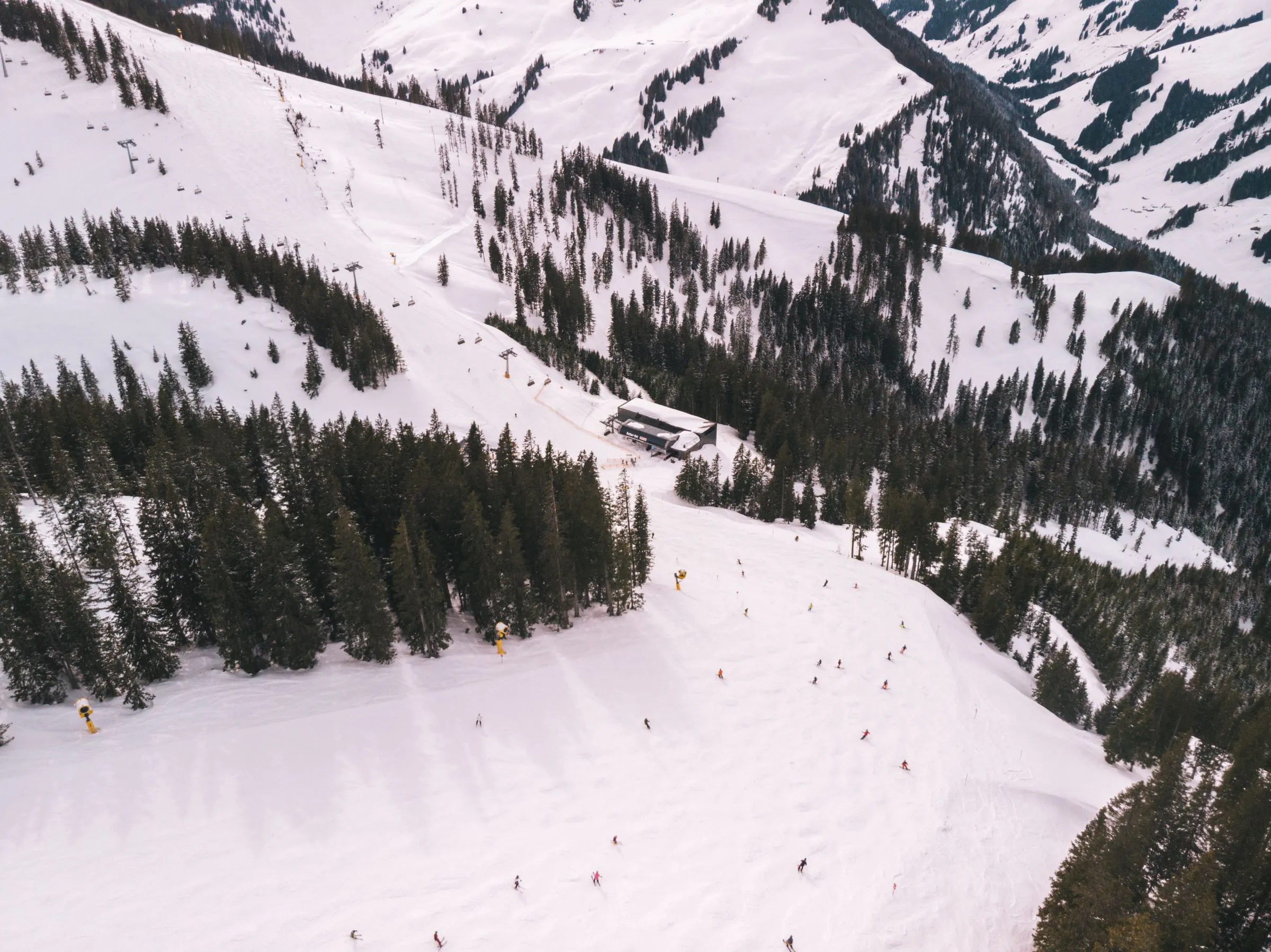
The Hahnenkamm is the big one. Its gondola leaves from the edge of town and connects into a large linked ski area towards Pengelstein, Jochberg and Pass Thurn. It also carries the Streif, the downhill course of the Hahnenkamm race, which gives the mountain its name recognition and a fair share of steep pistes. Confident intermediates and good skiers get the most out of it.
The Kitzbüheler Horn, across the valley, is the gentler choice. It tends to be quieter and suits relaxed cruising, sunny lunches and less experienced skiers. If your group mixes abilities, spend a day here.
Our ski area guide covers lifts, pistes and which pass to buy. If you are renting, read about ski hire in town before you arrive, since reserving ahead saves time in the busy weeks.
Tobogganing and night sledding
Tobogganing is the best activity for mixed groups, because skiers and non-skiers do it together. The official runs on Kitzbühel’s tourism site are in the villages around town rather than in the centre: the Gaisberg in Kirchberg (lift-served and floodlit), the Kelchalm above Aurach and the Trattenbachalm near Jochberg (both walk-up). Families and groups wanting an evening out should pick a lit, lift-served run. Fit walkers will prefer earning the descent on foot, with a hut lunch at the top. You can hire sledges at or near each run, so there’s no need to bring your own. Our page on the toboggan runs compares them.
Christmas and the Advent market
From mid-November the Hinterstadt and the Stadtpark host Kitzbühel’s Advent market, with stalls, live music and family extras. It is small and traditional rather than a big-city market, best as the evening after a day outside. Dates, hours and the special days are on our page about the Advent market in the old town.
New Year in Kitzbühel
The tourist office runs a three-day programme in the town centre around New Year, with light installations, street performers and music. There is no public fireworks display in town; the official programme says it has been replaced by a laser show. If you are thinking of seeing in the New Year here, book rooms and dinner early.
January and the Hahnenkamm race
January starts with the tail of the holidays, then turns very quiet on the slopes until the Hahnenkamm race week takes over the town. Race week is a festival for fans and an inconvenience for everyone else. Our guide to a January visit explains how to plan around it.
Off the slopes: walks, the Schwarzsee and the old town
Kitzbühel works better for non-skiers than most ski towns, because the town itself is worth the time.
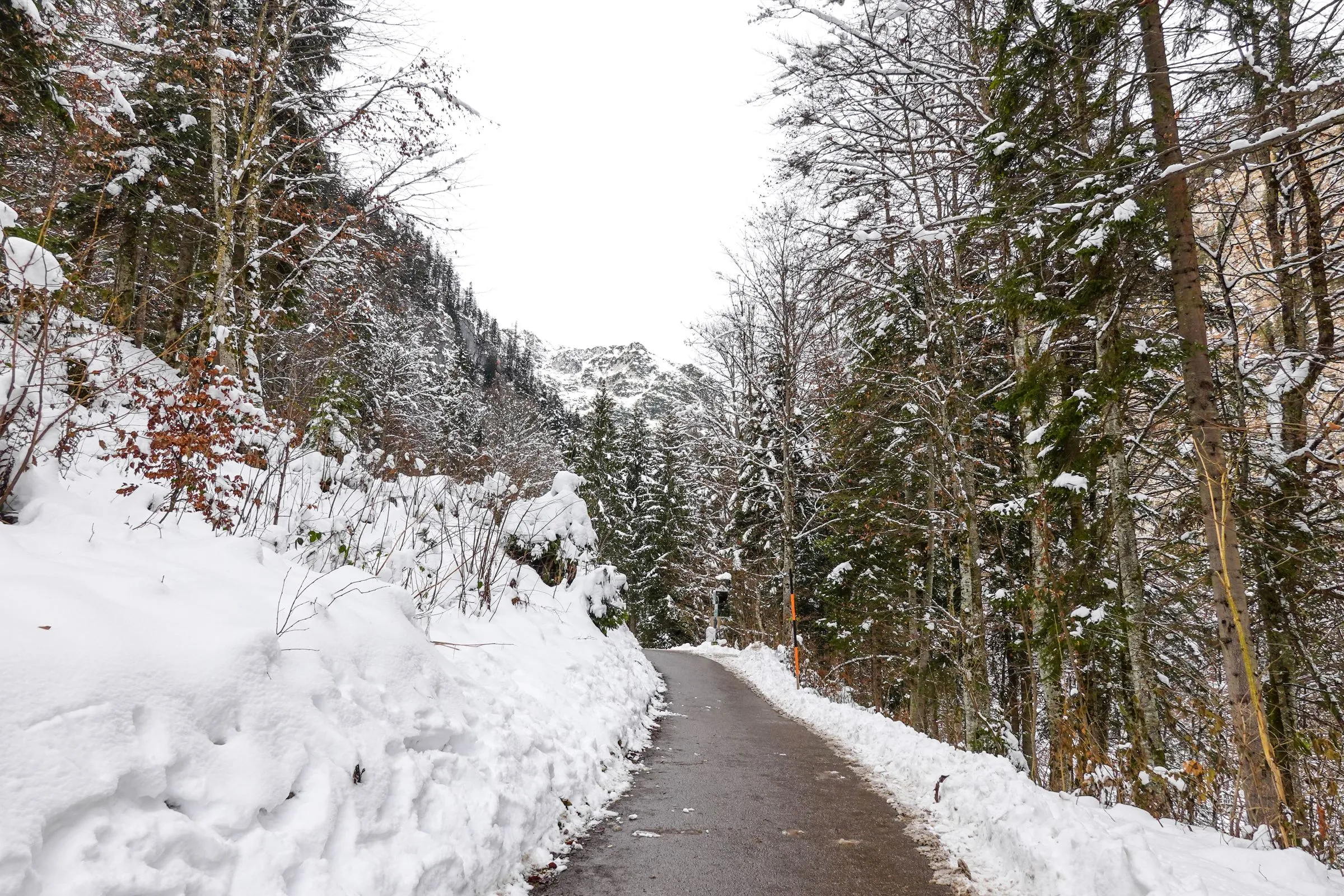
The Schwarzsee, a small lake west of the centre, is the classic winter walk. The tourist office describes it as about 30 minutes on foot from the centre, and there is a cleared loop around the water. In recent seasons it has also hosted torch-lit evening walks in the holiday weeks, so check the events calendar for this winter’s dates.
Back in town, the Vorderstadt and Hinterstadt are two parallel streets of painted houses, cafés, bakeries and shops. You can spend a slow afternoon here without trying. Non-skiers don’t have to stay in the valley. Several lifts carry pedestrians, so you can ride up to meet skiers for lunch at a mountain hut and come back down by lift. Check which lifts sell pedestrian tickets on kitzski.at before you plan the day around it.
For bad-weather days, the Aquarena near the Hahnenkamm gondola has indoor pools and a sauna area; check opening hours and prices on kitzbuehel.com.
If half your group won’t ski, our ideas for non-skiers go further, from museums to day trips.
Day trips are easier than people expect. Kitzbühel is on the railway, so Salzburg, Innsbruck and the frozen lake at Saalfelden are all within reach for a day without a car. On a grey day in the mountains, a city day out can be the better use of the time.
Who Kitzbühel in winter is not for
Kitzbühel is a great winter town but not the right pick for everyone, and three types of traveller should look elsewhere.
Snow-sure seekers. The town sits low for an Alpine resort and a long way below glacier ski areas. In a thin winter the lower runs rely on snowmaking and the valley can look brown. If your only week is early December or late March and good snow is the whole point, a higher resort is the safer bet.
Budget travellers. Kitzbühel is famous and priced to match, especially in holiday weeks and race week. There are cheaper beds in the surrounding villages, but it won’t be a bargain trip.
Party-only groups and powder hunters. The après scene is lively, yet it is not built around one giant party bar the way some resorts are. And freeriders chasing steep, deep powder tend to find more of it in high, snow-heavy areas.
Everyone else (mixed-ability groups, couples, families who like a real town rather than a purpose-built resort) is well served.
Getting here and where to stay
The easiest route for most visitors is the train. Kitzbühel is on the railway, with connections towards Salzburg, Innsbruck and, via Wörgl, Munich. Our guide to the train from Munich Airport walks through the connection, and our trip-planning guides cover the other airports and transfers.
Where you sleep matters more in winter than in summer. Stay in or near the centre if you want to walk to the Hahnenkamm gondola and to dinner; stay in Kirchberg or Reith if you want lower prices and don’t mind a bus or train ride. Our page on which area to stay in compares them.
If you drive, remember that mountain roads in winter call for proper winter tyres and, at times, snow chains; ask for both when you book a rental car. Once you arrive, you’ll rarely need the car in town, and parking near the lifts fills up in busy weeks.
Plan your trip
Where to stay
Compare hotels and apartments in the town centre, near the Hahnenkamm lift or in quieter Reith and Kirchberg.
Ski rental
Reserve skis and boots before you arrive and pick them up near the lift.
Airport transfer
Shared and private transfers from Munich, Salzburg and Innsbruck airports, door to door.
Some links are affiliate links. If you book through them we may earn a commission at no extra cost to you. How this works.
Which page to open next
If your dates are fixed, go straight to that month: December for the market and early skiing, the New Year page for the holiday week, January if you can choose a quiet week or want the race. If your dates are open, our advice is mid-January outside race week for skiers and early December for everyone else. And if the mountains win you over, the summer guide is the case for coming back in July.