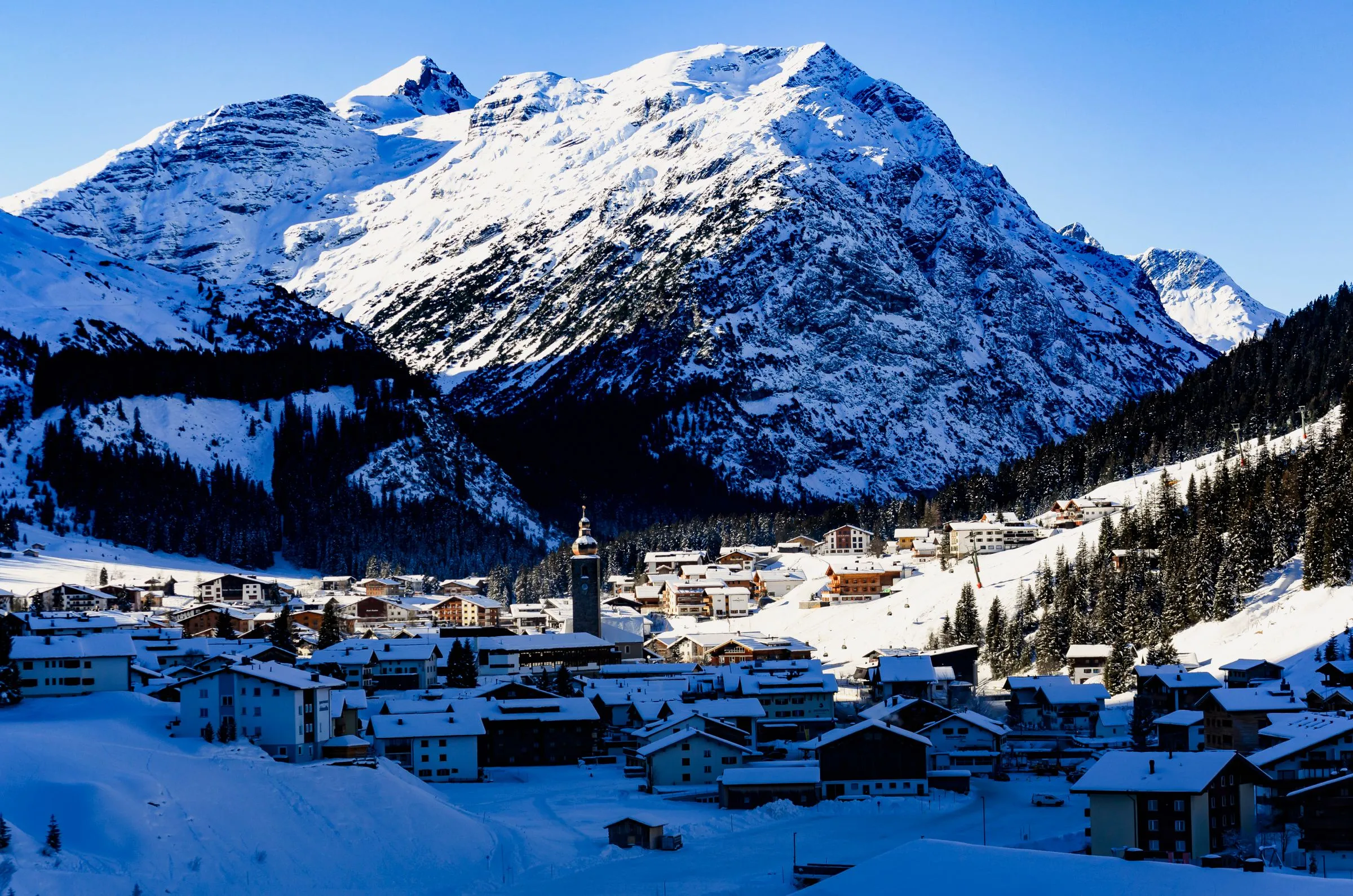
St Anton is the better choice if your group is made up of strong skiers who want steep, high-altitude terrain, lots of off-piste and the more reliable snow that comes with height. Kitzbühel is the better choice if the group is mostly intermediate, mixed in ability or includes non-skiers, because its skiing is more forgiving and the old town gives everyone something to do. The deciding question is who in your group is the weakest skier, and what the non-skiers will do all day.
Kitzbühel and St Anton are two of Austria’s most famous ski names, and they’re often mentioned in the same breath. They suit quite different groups. St Anton, part of the Ski Arlberg area, is high, steep and built for strong skiers. Kitzbühel, with the KitzSki area, is lower, gentler and wrapped around a proper old town.
We’re a Kitzbühel site, so we’ll be upfront: this page is meant to help you choose, not to sell you Kitzbühel. Where St Anton is the better choice, we say so. Figures come from each resort’s official site and are dated; everything else is qualitative.
The short verdict
St Anton for strong skiers and powder hunters; Kitzbühel for intermediates, mixed groups and anyone bringing non-skiers.
Choose Kitzbühel if:
- most of the group skis blue and red runs and wants long, varied days without terror
- someone in the group doesn’t ski, or only skis half days
- you want a real town with restaurants, shops and evenings beyond the bars
Choose St Anton if:
- everyone is a confident skier who wants steep blacks, ski routes and off-piste
- snow reliability matters more than anything else
- you want après on the mountain and don’t mind a smaller village
| Kitzbühel | St Anton | |
|---|---|---|
| Ski area | KitzSki | Ski Arlberg (with Lech, Zürs, Stuben, Warth-Schröcken) |
| Terrain style | Mostly blue and red, plus the Streif | Steep, high, lots of black and off-piste |
| Best for | Intermediates and mixed groups | Strong skiers and freeriders |
| Snow reliability | Good with snowmaking; thin low down in mild spells | Higher and usually more reliable |
| Off-piste | Some, not the main draw | A major draw (hire a guide) |
| Town | Historic old town, busy all day | Ski village built around the slopes |
| Après style | Valley-station bars, then the old town | On-mountain bars, then the village |
| Non-skiers | Plenty to do | Less to do |
| Nearest airports | Munich, Salzburg, Innsbruck | Innsbruck, then Zurich side |
Terrain: steep vs cruisy
St Anton has the steeper, bigger, more demanding skiing. Kitzbühel has the more comfortable, varied skiing for most people.
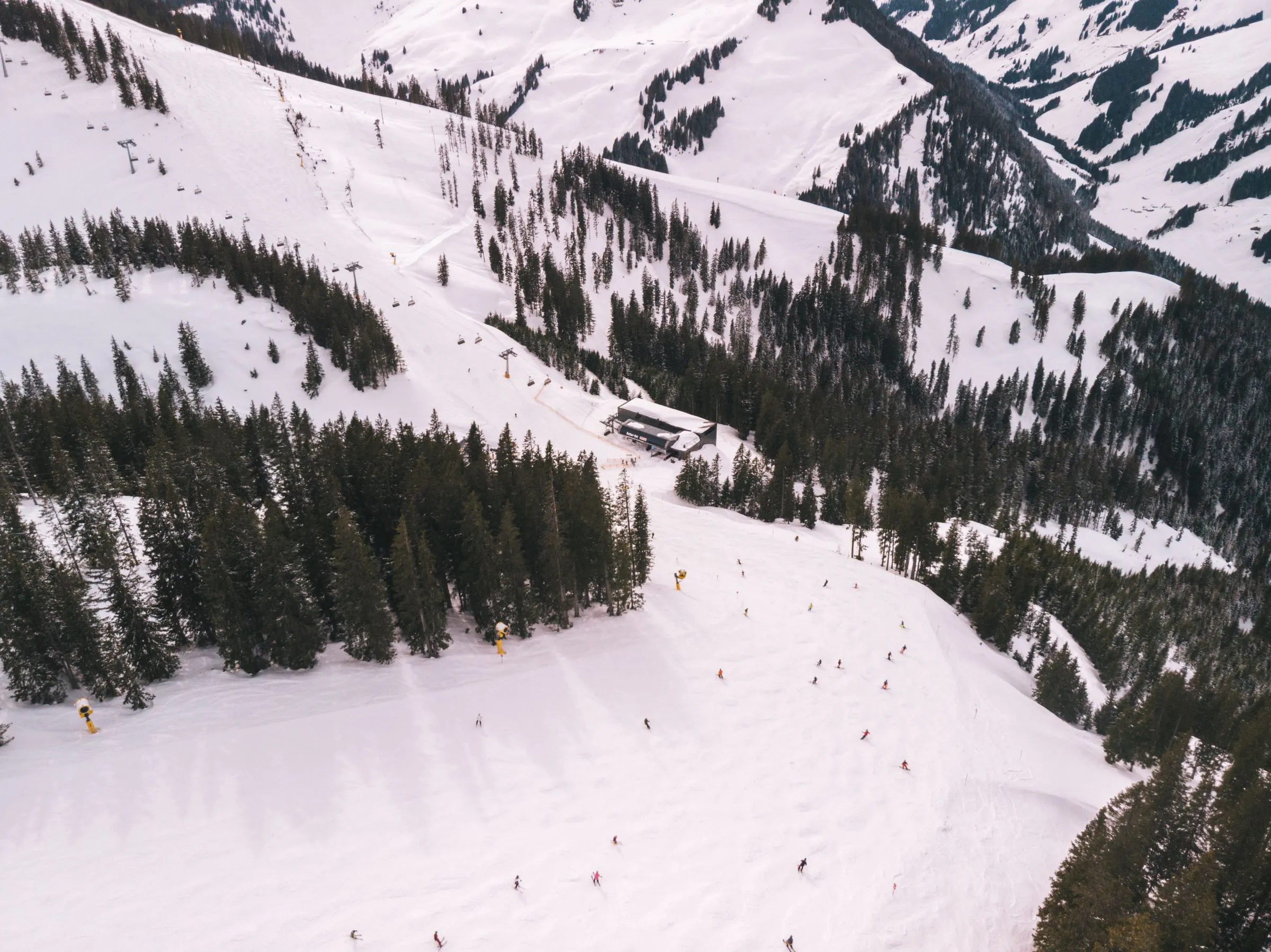
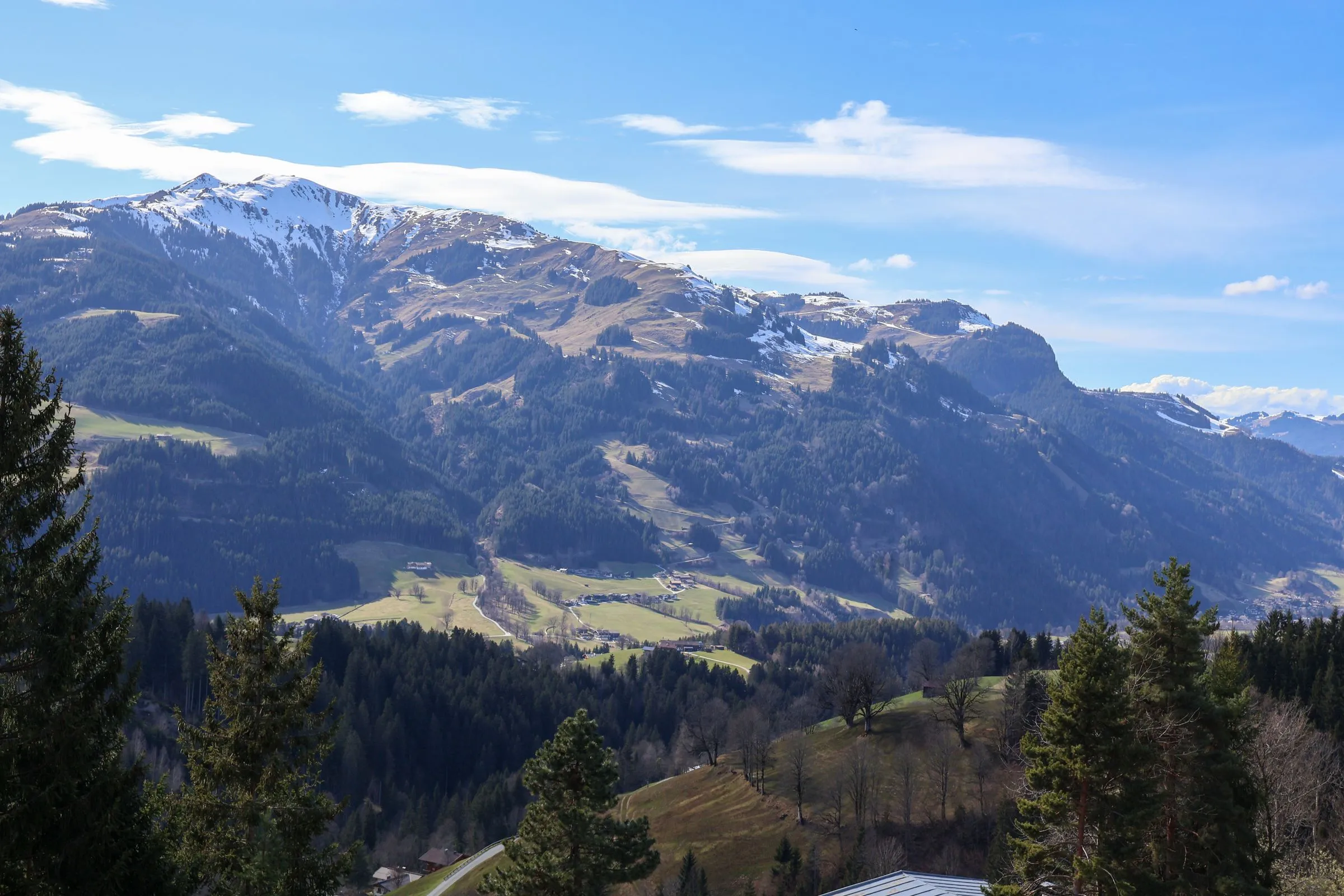
In Kitzbühel, the bulk of the skiing is blue and red runs spread across the Hahnenkamm, Pengelstein, Jochberg and Pass Thurn, plus the separate Kitzbüheler Horn. The Streif is there for anyone who wants to scare themselves, but the area’s real strength is long, rolling intermediate days. Our guide to the slopes explains how the sectors fit together.
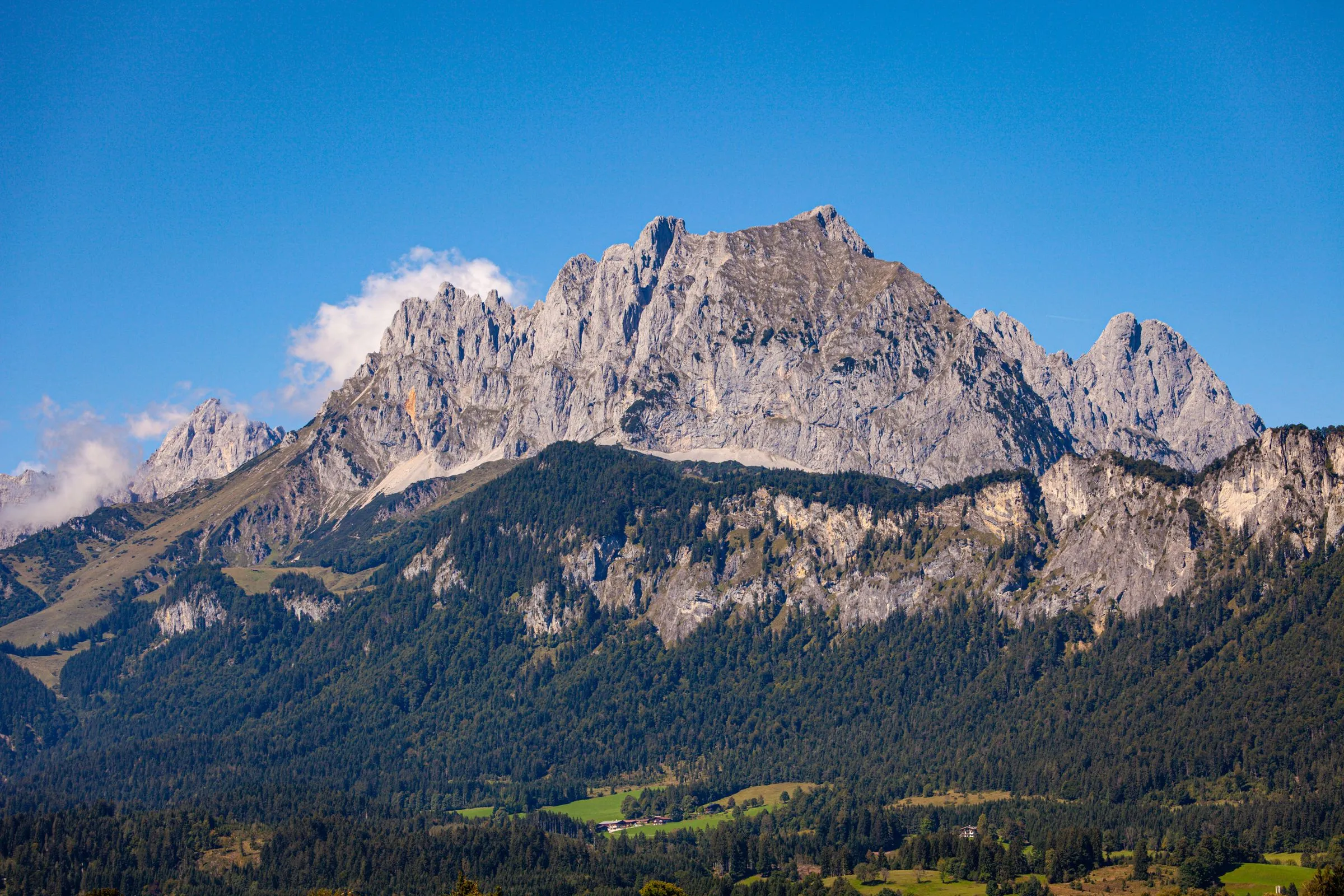
St Anton is a different animal. The Valluga, the highest lift-served point in the area, and the Rendl on the other side of the valley give access to steep blacks, unpisted ski routes and some of the best-known off-piste in the Alps. Ski Arlberg links St Anton with Lech, Zürs, Stuben and Warth-Schröcken; its official site lists 301 km of runs and 85 lifts across the area (skiarlberg.at, as of November 2026). Experts can ski there for a week without running out of challenges. Intermediates can, too, but they’ll spend more time on busy main runs and fewer of them will enjoy it.
Snow and altitude
St Anton is higher and usually snowier. Kitzbühel is lower and leans more heavily on snowmaking.
St Anton village sits at 1,304 m (stantonamarlberg.com, as of November 2026), and Ski Arlberg cites an average of around 9 m of snowfall a season (skiarlberg.at). Kitzbühel town is at 762 m (kitzbuehel.com, as of November 2026), so the runs back to town are the first to suffer in a mild spell.
This is Kitzbühel’s real weak spot. KitzSki has invested heavily in snowmaking, and its upper slopes are usually in good shape through the main season, but early December and late March are less dependable than at St Anton. If your only week is at either end of the season and snow is your top priority, St Anton is the safer bet.
Beginners and mixed groups
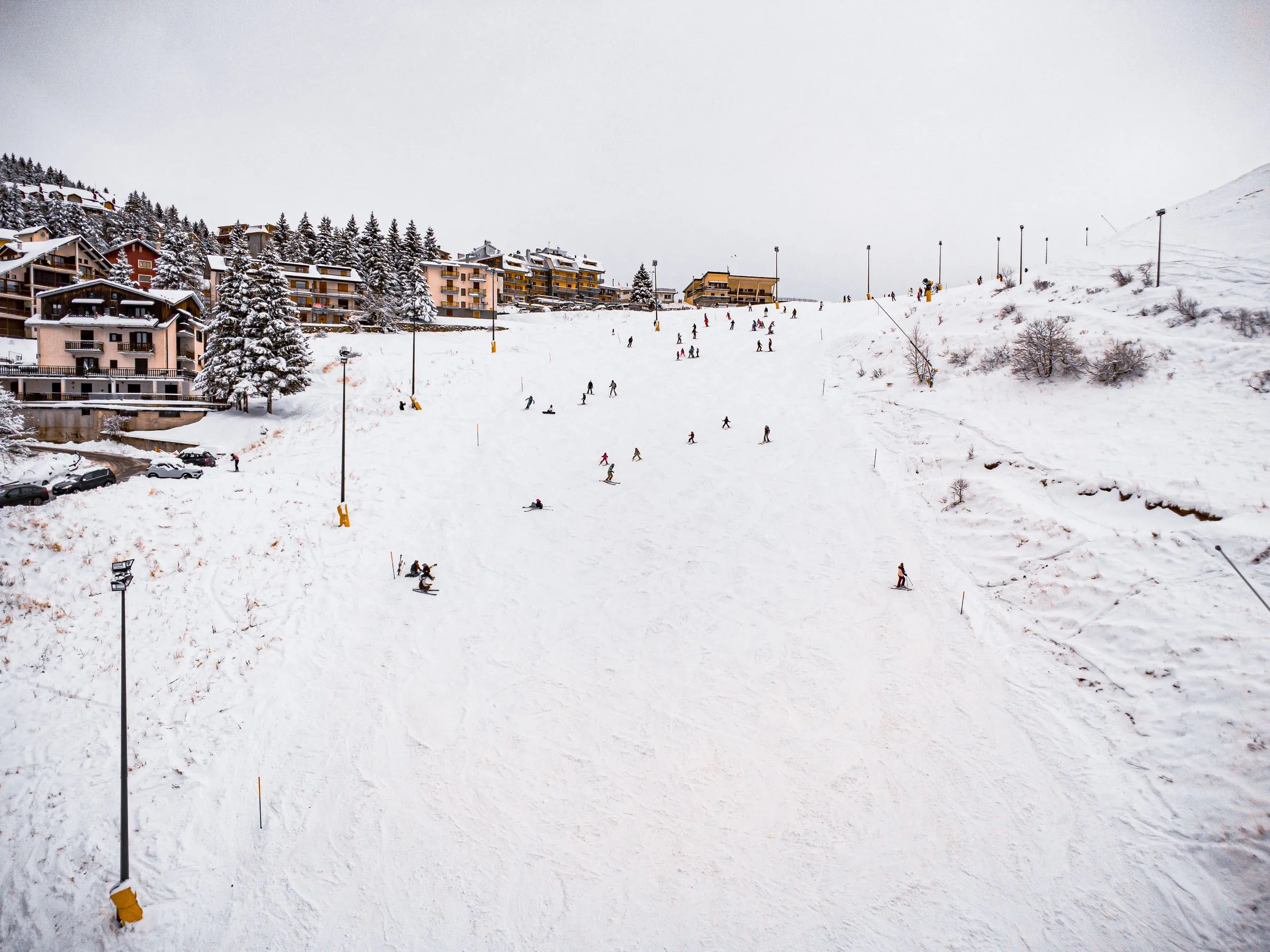
Kitzbühel is the better choice for mixed groups. It’s easier to find runs that everyone can ski together, and the official tourism site says the practice lifts in the valley are free to use without a paid ski pass (kitzbuehel.com, as of November 2026).
St Anton has nursery slopes and ski schools, but the area’s reputation, and much of its terrain, is aimed at strong skiers. A beginner in a group of experts there tends to spend the week on the same few runs while the others disappear up the Valluga.
Our position: if even one person in the group is in their first or second week on skis, pick Kitzbühel. For more on that, read learning to ski here.
Après-ski
Both resorts are big on après, but the style is different. St Anton is known for its on-mountain bars on the last runs down to the village, where the party gets going while people still have their skis on. Kitzbühel’s après starts at the bars around the Hahnenkammbahn valley station and moves into the old town in the evening.
The practical difference: in St Anton you ski down after drinking, in Kitzbühel you mostly walk. Our page on the après scene explains how a Kitzbühel evening usually runs.
The town and non-skiers
This is Kitzbühel’s clear advantage. It’s a historic town with an old centre full of shops, cafés and restaurants that work as well on a snowy afternoon as on a sunny one. Non-skiers can spend a week there without getting bored, and our list of the best things to do in town has plenty for days off the slopes.
St Anton is a ski village. It’s lively in season, but it’s built around skiing, and a non-skier will run out of things to do sooner. If someone in your group is coming for the town rather than the mountain, read who Kitzbühel suits before deciding.
Getting there
Kitzbühel is easiest from Munich, Salzburg or Innsbruck. St Anton is reached from the Innsbruck side, or from Zurich.
Both are on the railway. St Anton’s station is on the Arlberg line, a short walk from the village centre, with long-distance trains including ICE services (stantonamarlberg.com). Kitzbühel’s main station is on the ÖBB line between Wörgl and Salzburg, within walking distance of the old town. For the western approach to Kitzbühel, see the Innsbruck route.
The two resorts are far apart: St Anton is well west of Innsbruck, Kitzbühel well east. Don’t plan to combine them in a day.
Cost
Both are expensive by Austrian standards, and neither is a budget ski trip. Lift passes in both are at the top end of the market, and hotels in the centre of either fill up and get pricier in peak weeks.
Prices change every season, so compare the current figures for your dates directly on kitzski.at and skiarlberg.at. Look at accommodation too: in both places, staying a little out of the centre is the easiest way to cut the bill.
Where to stay if you pick Kitzbühel
Stay in or near the old town if you want to walk to the Hahnenkammbahn and to dinner. Stay in Kirchberg or out towards the Horn if you’d rather pay less and don’t mind a bus or train. Our guide to choosing a base compares the areas.
Plan your trip
Where to stay
Compare hotels and apartments in the town centre, near the Hahnenkamm lift or in quieter Reith and Kirchberg.
Airport transfer
Shared and private transfers from Munich, Salzburg and Innsbruck airports, door to door.
Some links are affiliate links. If you book through them we may earn a commission at no extra cost to you. How this works.
The decision rule
Pick St Anton if your weakest skier is confident on black runs; pick Kitzbühel if they aren’t, or if anyone is coming for the town rather than the slopes. If you choose Kitzbühel and want variety during the week, look at the other ski areas within reach for a day away.