Hallstatt is roughly 150 km and about two and a half hours by road from Kitzbühel, so a day trip works by car or with a private driver, though it is a long day. By public transport the journey takes about four hours each way with at least one change and a ferry, which leaves little time in the village. Plan three to four hours in Hallstatt itself, and in winter check the salt mine's shorter hours and its January closure before you go.
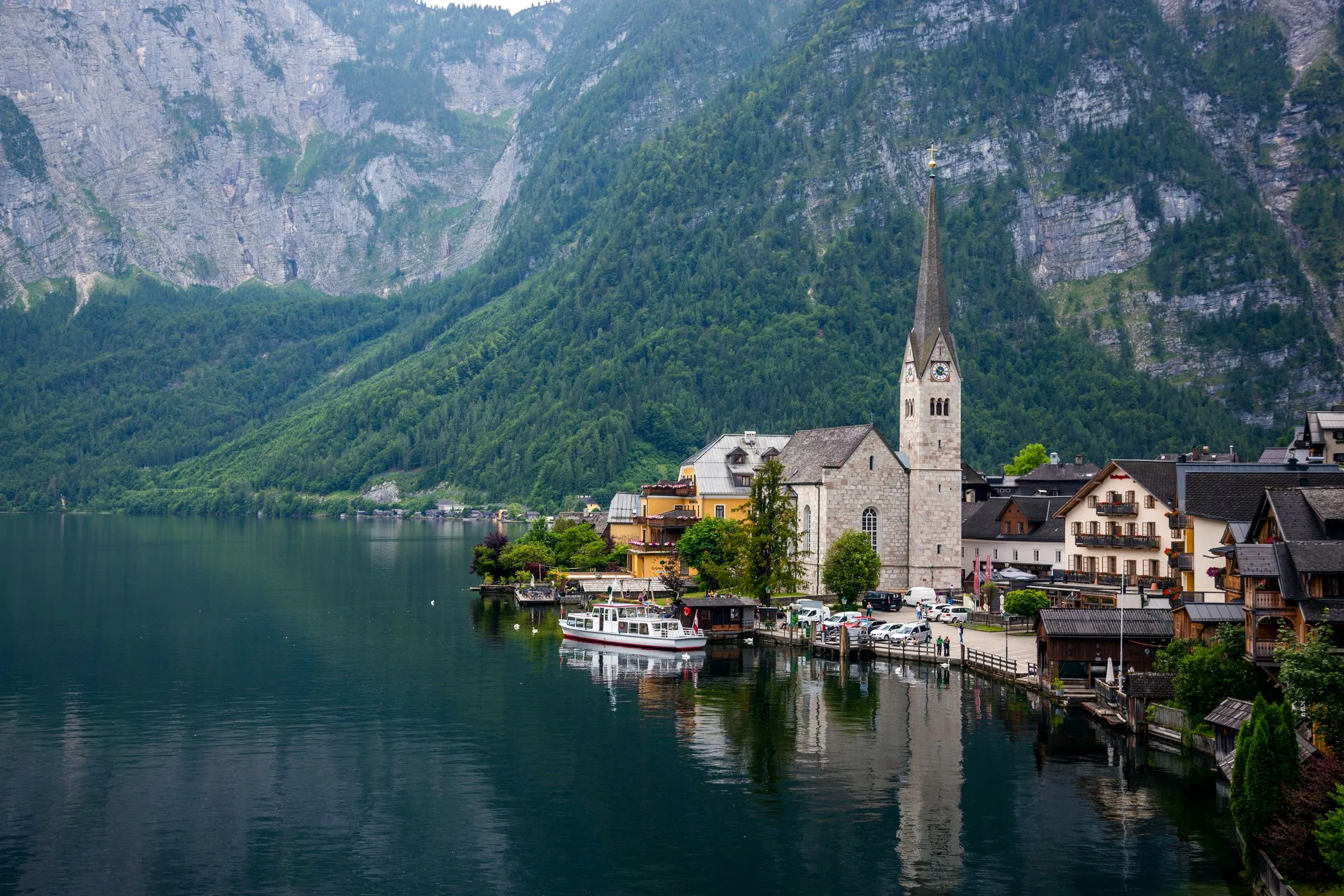
Hallstatt sits on its lake in the Salzkammergut, in Upper Austria, and from Kitzbühel it is about as far as a day trip can sensibly go. You can do it, and plenty of people do, but the day is shaped by the road more than by the village.
This page is for one decision: whether to go with a private driver, drive yourself or take the train, and how to use the hours you get. If you’re weighing Hallstatt against closer options, our list of trips further afield compares them, and for everything else to do in Kitzbühel start with the main guide.
We give journey times and opening hours only where an official source or route planner publishes them, dated November 2026.
How far is Hallstatt from Kitzbühel?
About 150 km by road, which is roughly two and a half hours each way in normal traffic. That figure comes from an OpenStreetMap-based route planner on 12 November 2026; check ÖAMTC’s route planner on the day for traffic and roadworks.
There are two sensible routes. The shorter one leaves Tyrol via St. Johann and Lofer, cuts past Bad Reichenhall into the Salzburg area, then follows the A10 south before turning through the Lammertal and over the Pass Gschütt to Gosau and down to the lake. The other heads south to Zell am See, east along the Salzach valley to Bischofshofen and joins the same Gosau road from there. A good driver will pick between them by traffic, and the second route avoids German roads entirely.
Either way you use a stretch of the A10, which is a vignette motorway, so a self-driver needs a valid vignette (ASFINAG). From 1 November to 15 April, winter tyres are compulsory in wintry conditions (oesterreich.gv.at), and the Pass Gschütt can be properly snowy.
Why the train is slow
Public transport works, but the geography is against you. Hallstatt station is on the opposite shore of the lake from the village, and no fast line runs from Tyrol into the Salzkammergut.
We checked ÖBB’s planner, Scotty, for a weekday in mid-November 2026, so treat what follows as the pattern as of November 2026. The cleanest connection was an InterCity train from Kitzbühel to Stainach-Irdning in Styria, then a regional train north along the Salzkammergut line to Hallstatt station, about four hours in total. The quickest option was a little under four hours but used three buses after Golling. Some connections went via Salzburg and the Wolfgangsee by bus. None was under three and a half hours.
At Hallstatt station you board the small ferry across to the village. The operator says it runs all year, timed to the trains, with departures shifted if a train is late (Hallstättersee Schifffahrt). It is cash only.
The timetable changes on 13 December 2026, so check Scotty for your date. Our verdict: the train suits someone who enjoys the ride itself. For anyone who wants time in Hallstatt, eight hours on trains and buses is too much.
What a private day looks like
Plan on leaving Kitzbühel between 7 and 7:30 am and getting back between 6 and 8 pm. That gives you the drive, three or four hours in Hallstatt and room for one more stop, not three.
A summer day. Leave at 7:30 and go via the Lammertal and the Pass Gschütt, stopping at the Gosausee below the Dachstein glacier for half an hour while the water is still. Reach Hallstatt by about 10:30, ahead of most coaches. Spend the middle of the day in the village and up at the Skywalk, then come back through Bad Ischl and along the Wolfgangsee, with a coffee in St. Gilgen if anyone has the energy.
A Dachstein day. If views matter more than the village, drive to Obertraun, the next village along the lake, and ride the Dachstein Krippenstein cable car first. The 5fingers platform hangs over a 400-metre drop with Hallstatt below, about 20 to 30 minutes’ easy walk from the Krippenstein station (Dachstein Salzkammergut). The Giant Ice Cave starts from the middle station, Schönbergalm; guided tours last about 50 minutes and ran from 1 May to 1 November in 2026 (cave opening times, as of November 2026). Add Hallstatt afterwards and that is a full, tiring day. It is not one for small children.
A winter day. Leave by 7:00, because daylight and the salt mine both finish early. Skip extra stops and give the time to Hallstatt itself.
What about Salzburg? It is roughly on the way, and it’s tempting to add it. We wouldn’t. Two hours in Salzburg plus Hallstatt plus five hours of driving is a day you’ll mostly remember from the car. If Salzburg matters to you, give it its own day by train; our guide to the Salzburg route covers the line.
What to see in Hallstatt in three or four hours
Three or four hours covers the village, one paid sight and the view from above.
Start at the Marktplatz, the small square ringed by painted houses, and walk the lakeside lane in both directions. The Beinhaus (charnel house) in St. Michael’s Chapel behind the Catholic church holds painted skulls, a local custom born of a tiny graveyard; it’s a short visit with a small entry fee and shorter opening hours in winter, so check before you rely on it.
The Salzwelten salt mine sits above the village and is reached by the Salzbergbahn funicular, which reopened in late summer 2026 after a rebuild. From the top station a walk through the high valley leads to the Skywalk, a viewing platform 360 metres above the rooftops (Salzwelten). The local tourism board’s FAQ says the Skywalk itself is free once you are up there (FAQ), but you still need a funicular ticket or, in summer, about an hour’s hike to reach it.
| Item | Detail |
|---|---|
| Salt mine incl. funicular | Adults €49, children 4–15 €23 |
| Funicular only, up and down | Adults €29, children 4–15 €14 |
| Mine, 2 Nov 2026 to 6 Jan 2027 | Last tour 2:50 pm |
| Mine and funicular, 7 to 29 Jan 2027 | Closed |
| Mine, 30 Jan to 19 Mar 2027 | Last tour 2:30 pm |
| Mine, from 20 Mar 2027 | Last tour 4:30 pm |
| Closed days | 24 and 31 December |
Salzwelten says the last ascent is 50 minutes before the last tour starts, so you need to be at the valley station by 2 pm until 6 January, and by 1:40 pm from 30 January to 19 March. Book online if your day is fixed.
The postcard view, the church spire with houses stacked behind it, is taken from the road at the northern end of the village. Walk there last, when you’re heading back to the car parks anyway.
Hallstatt’s visitor rules
Hallstatt manages its visitors firmly, and the rules shape a private trip more than a self-drive one.
The centre is closed to traffic. Barriers keep cars out and only residents may drive in. Day visitors park in P1, open all year and about 20 minutes’ walk from the centre, or P2 by the funicular, open in summer and about 15 minutes’ walk. You can’t reserve a space, so arrive early (hallstatt.net, as of November 2026). If both are full, the tourism board suggests parking at Steeg-Gosau station and continuing by train and ferry.
Coaches need a slot. Since June 2020, buses carrying passengers to Hallstatt must book an entry and exit slot online, with the exit at least 2 hours 20 minutes after entry. They drop off at a terminal by the bypass tunnel at the southern entrance and then park in P3 towards Obertraun (hallstatt.net, as of November 2026). The official pages don’t say how the slot rule treats small minibuses, so if you book a group vehicle, ask the operator whether they need a slot and where they’ll drop you.
For a private car, expect your driver to drop you near P1 and either wait there or meet you at an agreed time. Parking fees are charged by the hour, which is one more thing to clarify when you book.
Be a good guest. About 750 people live in Hallstatt, and the town’s own site asks visitors to speak quietly, keep out of gardens and private property, and leave drones at home (hallstatt.net). Photograph the view, not people’s front doors, and don’t sit on house steps for a picture.
Winter or summer, and the best time of day
Summer gives you more options; winter gives you a quieter village and shorter days.
In summer the Krippenstein cable car ran from 1 May to 1 November 2026 (operating times), and long evenings let you linger. The cost is crowds, especially in the middle of the day.
In winter the ice cave is closed, and the Krippenstein reopens for the season on 19 December 2026, running to 29 March 2027 (winter operation, as of November 2026). In winter, 5fingers is reached by a marked snowshoe trail, about an hour there and back, with snowshoes for hire at the mountain station (snowshoe hiking). No regular cable car operation is listed between the summer season’s end on 1 November and the 19 December winter start, so before then plan on Hallstatt and the salt mine only.
For the time of day, our advice is simple: be in the village before 10:30 or stay until late afternoon. Coaches are tied to slots of at least 2 hours 20 minutes, so the middle of the day is when most groups overlap.
Watch the forecast too. A wet day hides the mountains and makes the Skywalk pointless, and on that kind of day a bad-weather plan closer to home is the better choice. In deep winter, Saalfelden and Leogang give you a lake and a day out for a fraction of the driving.
What to check before you book a private trip
A private Hallstatt trip is a long booking, and the details matter more than the vehicle’s brand. Before you pay, check:
- Duration and pick-up time. A realistic quote is 10 to 12 hours door to door. Anything much shorter means less time in Hallstatt.
- Waiting time. Is the driver with you all day, and is parking in P1 or P2 included?
- Entrance fees. Are the salt mine, funicular or Krippenstein cable car included, or do you pay on the spot?
- Route and stops. Can you add the Gosausee or St. Gilgen, and does that cost extra?
- The vehicle. Winter tyres from November, and a vehicle size that fits your group and any luggage.
- Child seats. Ask for them by age and weight, in writing.
- Cancellation. What happens if snow closes the pass or the forecast turns, and how late you can cancel.
Searches for a “premium” trip usually mean a better car or a smaller group. Ask exactly what the price includes rather than relying on the label. The same checks apply if you’re also thinking about a driver-guided ski day during your stay.
Private trip, self-drive or train?
| Option | Time each way | Best for | Main drawback |
|---|---|---|---|
| Private driver | About 2.5 hours by road | Families, groups, winter roads, extra stops | The highest cost |
| Self-drive | About 2.5 hours by road | Confident drivers who want flexibility | Parking, vignette, snowy passes |
| Train and ferry | About 4 hours with changes | Rail fans with a long summer day | Little time left in Hallstatt |
Plan your trip
Tours and activities
Book guided hikes, lessons or a day trip to Salzburg before the busy weeks fill up.
Car rental
Useful for day trips and mountain roads. In winter, ask for a car fitted with winter tyres.
Some links are affiliate links. If you book through them we may earn a commission at no extra cost to you. How this works.
Should you go?
Go if Hallstatt is the image that made you want to see Austria, and book a private driver if you’re travelling with children, in winter or as a group: the road is the hard part, and handing it over makes the day enjoyable. Drive yourself if you’re comfortable on snowy passes and want to stop where you like. Skip the train unless the journey is the point.
Slot it into sample itineraries on a day when the weather in Kitzbühel is poor and the forecast for the Salzkammergut is clear. If you haven’t booked yet, choosing a base near the main road out of town saves time on an early start, and our trip-planning guides cover the rest.