Visit Kitzbühel from mid-January to mid-March for skiing, when the snow is most reliable, but avoid the January race week unless you're going for the race. Come from July to early September for hiking and swimming, and in late September for quiet trails and autumn colour. April, May and November are in-between months when many lifts and huts close, so they suit a cheap, quiet stay rather than a full holiday.
Kitzbühel has two real seasons, winter and summer, with quiet gaps between them. The best time depends on which season you want, and the most common mistake is booking a shoulder month and finding the lifts shut.
This guide gives a verdict per traveller, then goes through the year month by month, with what’s open as well as what the weather is doing. For weather statistics we’d only trust official climate normals, so the descriptions below are qualitative.
The short answer by trip type
Ski from late January to early March, hike from July to early September, and come in late September for quiet.
| Trip type | Best months | Why | Avoid |
|---|---|---|---|
| Skiing | Late January to early March | Reliable snow, longer days, fewer crowds than the holidays | Race week in January |
| Non-skiers in winter | December | Advent market, festive town, lifts open | Race week |
| Hiking | July to early September | All lifts and huts open | April, May, November |
| Lake and families | July and August | Swimming in the Schwarzsee, school holidays | Spring |
| Quiet and budget | Late September, early October | Empty trails, autumn colour | Late October onwards if you want lifts |
Kitzbühel month by month
| Month | Conditions | What's open | Crowds | Verdict |
|---|---|---|---|---|
| January | Cold, best chance of fresh snow | Full ski area | Very high in race week, otherwise moderate | Good after race week |
| February | Cold, longer days | Full ski area | High in school holidays | Best for skiing |
| March | Sunny, softer snow later | Full ski area until late March | Moderate | Good for spring skiing |
| April | Mixed, snow melting in the valley | Season ends early in the month | Low | Quiet break only |
| May | Green valley, snow up high | First summer lifts reopen, many huts still shut | Very low | Quiet break, easy walks |
| June | Warm, some showers | Summer lifts opening | Low | Good for early hiking |
| July | Warm, afternoon storms possible | Everything | High | Best for summer |
| August | Warm, afternoon storms possible | Everything | High | Great for families |
| September | Settled, cooler nights | Most lifts and huts | Falling | Best for hiking in peace |
| October | Crisp, autumn colour | Some lifts and huts closing | Low | Good for walkers |
| November | Grey, first snow | Ski season starting up high | Very low | Early-season skiers only |
| December | Cold, festive | Ski area opening fully, Advent market | High over the holidays | Good for non-skiers |
Winter (December to March)
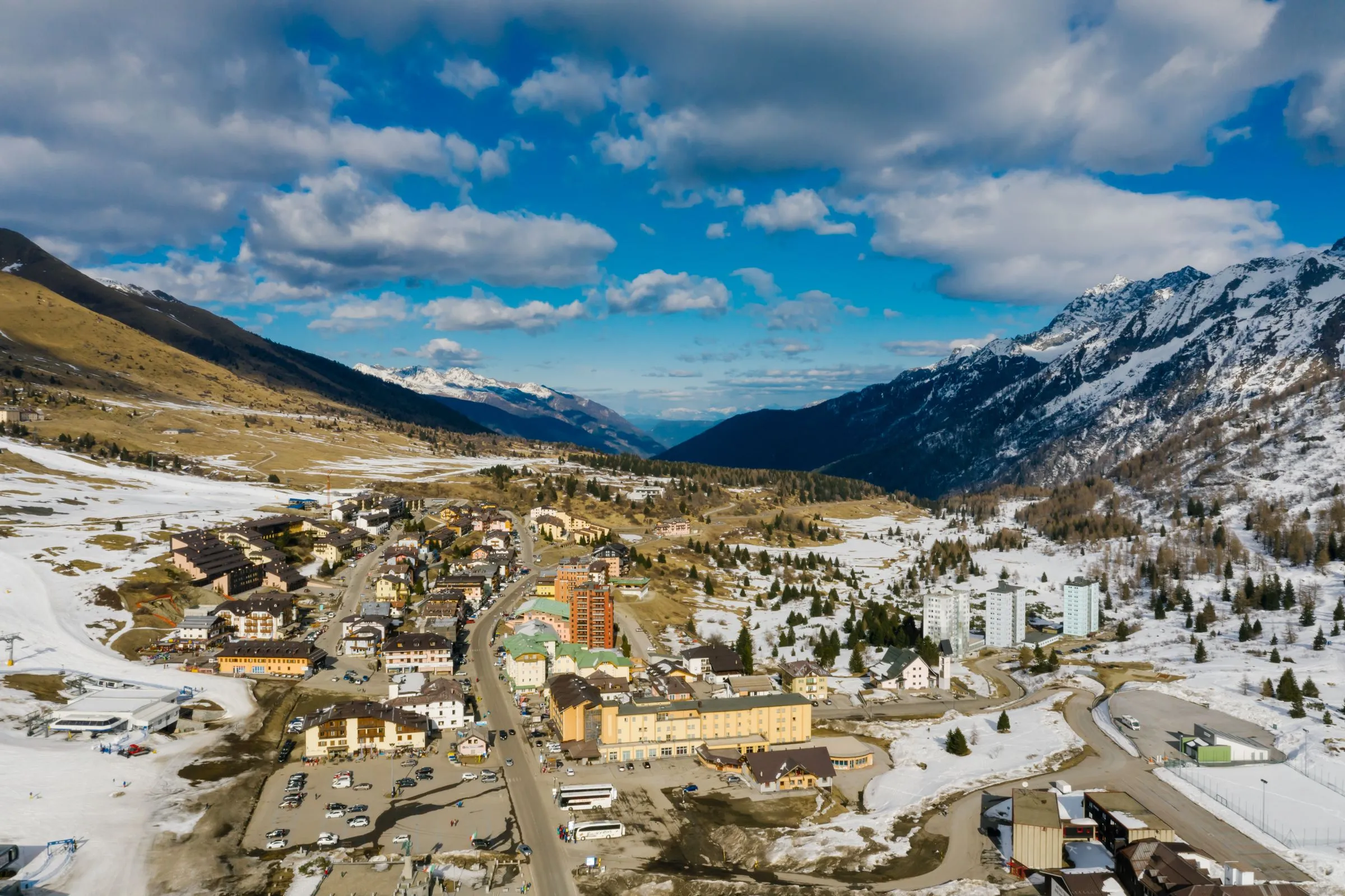
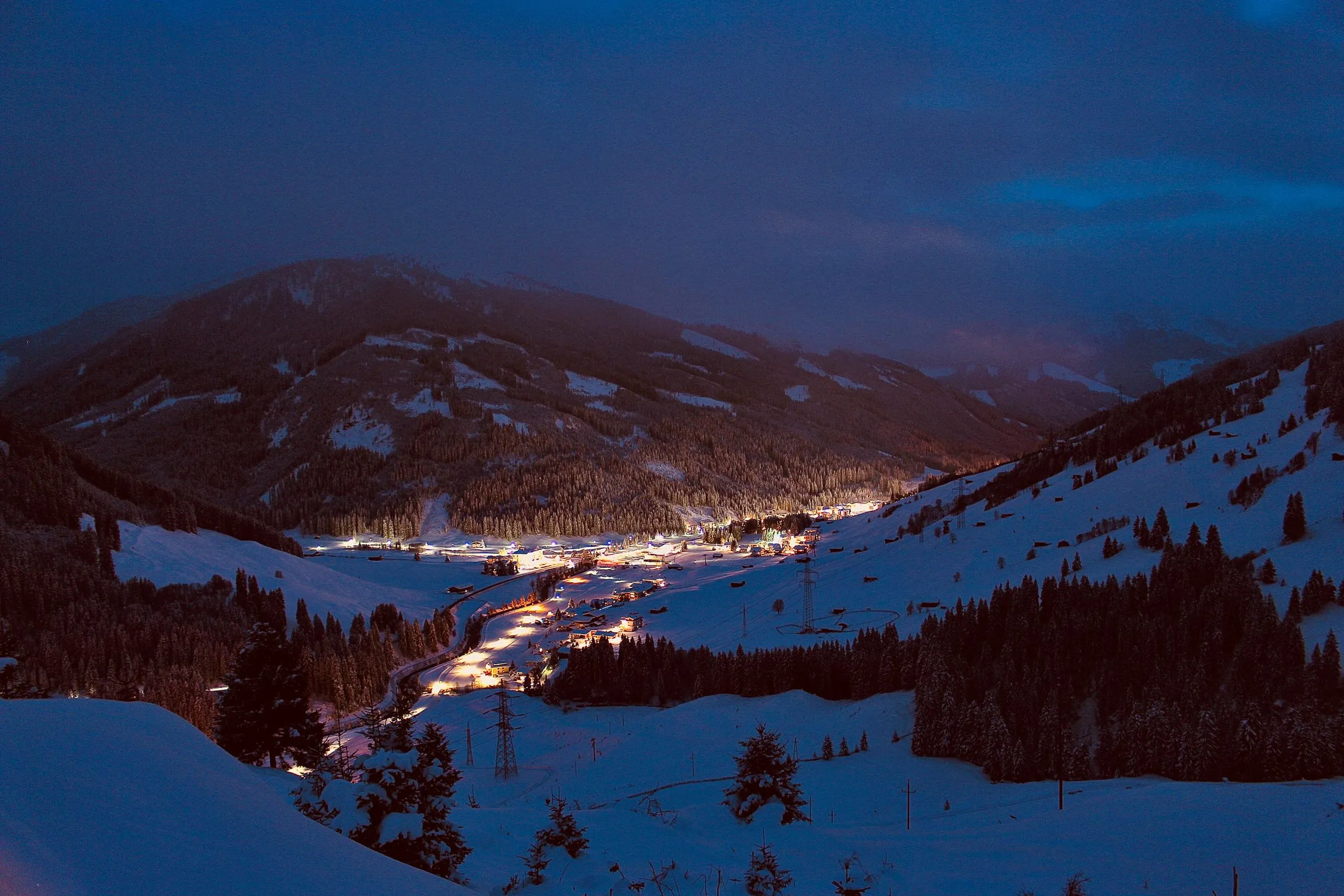
Winter is the main season, and the best weeks are between late January and early March.
The ski season starts early. KitzSki’s plan for 2026/27 opens the Resterkogel in early November, adds the Hahnenkamm and Horn from late November, and runs the full ski connection from December to late March, with a season finale into early April (KitzSki, as of November 2026). All of it depends on snow. Our page on when the season opens has the details.
December is the festive month. The Advent market runs in the Hinterstadt and the town park from mid-November to late December (Kitzbühel Advent), and our guide to Kitzbühel in December covers the month. Christmas and New Year are among the busiest and dearest weeks.
January has the race. The Hahnenkamm races take over the town for a week in the second half of the month (Hahnenkamm race). If you’re going for the race, it’s the highlight of the year. If you’re not, it’s the week to avoid.
Our pick is late January to early March, outside race week. By then the snow base is usually established, the holiday crowds have gone, and in March the days are long and sunny.
March deserves its own note. The sun is higher, the mornings are crisp and the afternoons soft, which suits relaxed skiers and terrace lunches more than people chasing powder. Much of Kitzbühel’s skiing sits at moderate altitude, so in a warm spring the lower runs back to town can turn slushy or close first. If you book March, book the first half, and be ready to ski the upper slopes and ride the lift down.
Non-skiers have a different calendar. December gives them the most to do, with the Advent market and a festive town, while January and February are the months to come for walks and the spa when the town is quieter outside the holidays.
Spring: April and May
Spring is the gap between seasons. The ski season winds down in early April, and many lifts and huts close for a break before summer.
That makes Kitzbühel in April a strange trip. There may still be snow at the top early in the month, but the valley turns green, the town is quiet and most of the mountain is shut. It suits someone who wants a cheap, quiet stay, low walks and long lunches in town. It doesn’t suit anyone who wants a full holiday programme.
May is quieter still, but the mountains start to wake up. In 2026 the Hahnenkammbahn reopened for walkers in May and the Horn lifts followed late in the month, according to KitzSki’s Alpine Summer 2026 brochure (as of November 2026). Many huts and higher trails stay shut until June, and summer lift dates change each year, so check kitzski.at before you book.
Summer (June to September)
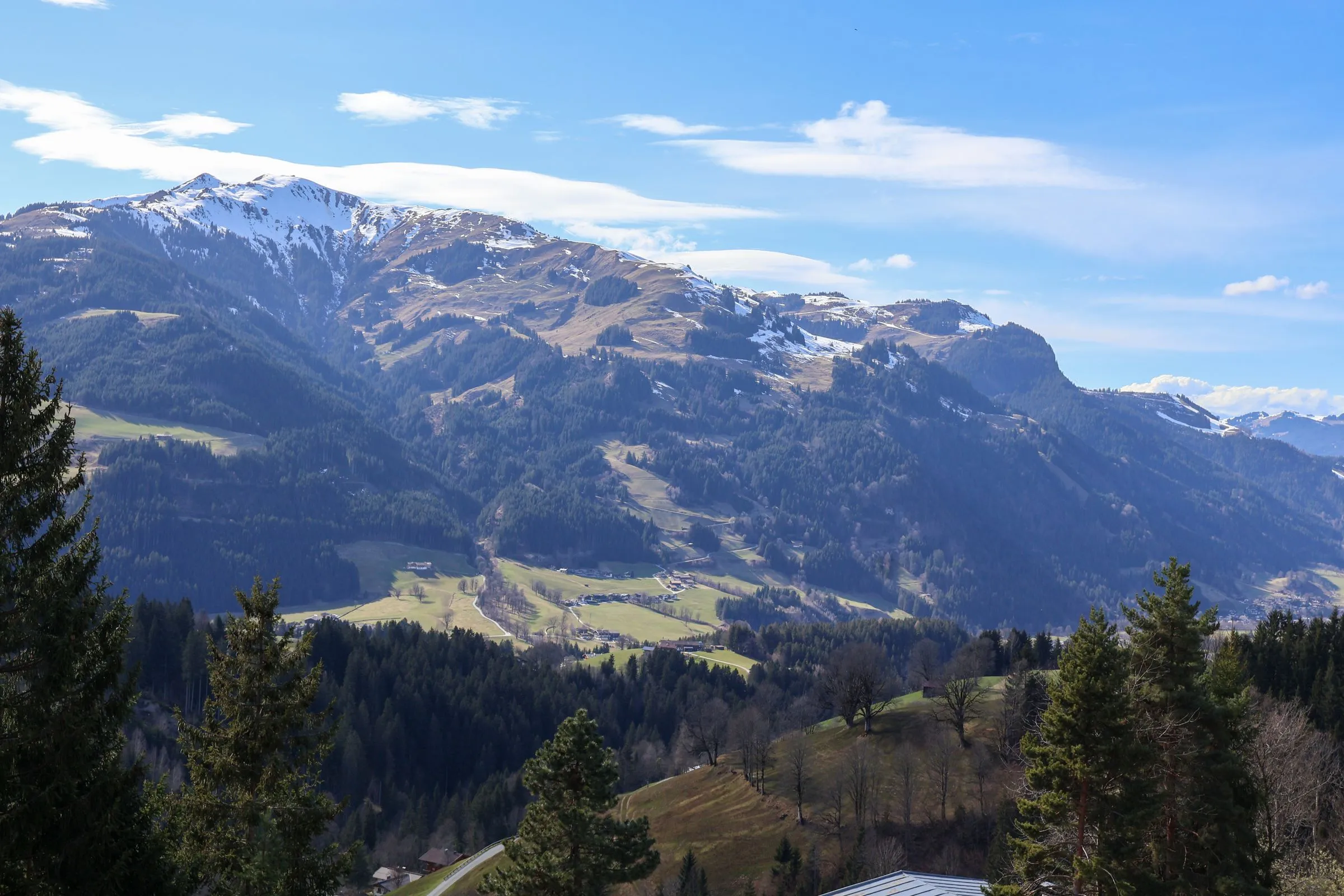
Summer is the second high season, and July and August are its peak.
The lifts carry walkers up both mountains, the huts are open, and the Schwarzsee becomes the town’s swimming lake; our guide to the Schwarzsee covers it. Kitzbühel also hosts its ATP tennis tournament in July (Generali Open), which fills the town for a week.
Expect warm days and the occasional afternoon thunderstorm in the mountains. Start hikes early and be off exposed ridges by mid-afternoon.
Each summer month has its own character. June is quieter, with some higher trails still holding snow and the meadows at their greenest. July is the fullest month, with every lift running, the lake warming up and the tennis in town. August is the family month, busy with school holidays across Europe. Early September often has the most settled weather of the summer and far fewer people, which is why it’s our favourite month for hiking here.
Autumn: October and November
Autumn is quiet, and October is the best of it.
Kitzbühel in October is crisp and often clear, with autumn colour on the valley slopes and empty trails. It suits walkers who don’t mind cool mornings. Some lifts and huts close for the season during the month, so check what’s running before planning a high hike.
November is the real low point. The valley is often grey and the summer season is over, while skiing only starts on the higher slopes. It’s for early-season skiers and people who want the place to themselves. For when the lifts start turning, see the season-dates page linked above.
When it’s busiest and most expensive
The busiest weeks are race week in January, Christmas and New Year, and school holiday weeks in February. Summer peaks in July and August.
Prices follow demand, so the same room can cost far more in these weeks than in late January or March. If price matters, avoid them, or book several months ahead. Our guide to what a trip costs breaks down the main expenses.
School holidays matter more than people expect. Kitzbühel draws visitors from Germany, the Netherlands, the UK and elsewhere, and their winter breaks cluster in February, so the slopes and hotels fill even outside the famous weeks. Easter can bring a last rush if it falls before the season ends. If you have a free choice, the quietest good-snow window is usually the second half of January after race week, or early March.
Weather and what to pack
We don’t quote average temperatures here, because the figures that circulate online come from aggregators that disagree with each other. The official source for Austrian climate data is GeoSphere Austria, the national weather and geophysics service, if you want the long-term numbers.
What matters for packing is simpler. Winter in the valley is cold and often below freezing, and the mountain is colder and windier than the town. Summer days are warm in the valley but cool at the top of the lifts, so carry a layer and a rain jacket even when it’s sunny below. In spring and autumn, pack for both: a sunny October afternoon can turn into a frosty evening. If the forecast turns, keep a bad-weather plan in your pocket.
Once you’ve picked your dates
Book your base next. Our guide to the best areas to stay compares the town centre with the villages, and if you’re flying in, the Munich Airport route explains the train and transfer options.
Plan your trip
Where to stay
Compare hotels and apartments in the town centre, near the Hahnenkamm lift or in quieter Reith and Kirchberg.
Airport transfer
Shared and private transfers from Munich, Salzburg and Innsbruck airports, door to door.
Tours and activities
Book guided hikes, lessons or a day trip to Salzburg before the busy weeks fill up.
Some links are affiliate links. If you book through them we may earn a commission at no extra cost to you. How this works.
Our pick for a first visit
If you can choose freely, come in February to ski or July to hike. Then plan the days with a 1-, 2- or 3-day itinerary, check whether Kitzbühel is worth it for your group, and use our trip-planning guides for the rest. Our Kitzbühel guide has everything else.